This is part of Ingredient Intelligence, a series tracking where the supplement market is going and what it means for your next SKU.
Executive Summary
Collagen has matured from a single-ingredient beauty supplement into one of the supplement industry’s most durable growth categories, and the next phase of differentiation is multi-source formulation. By blending bovine, marine, chicken, and eggshell membrane collagen, brands can span Type I beauty positioning and Type II mobility support in a single product. This broader wellness story unlocks premium positioning, multi-benefit claims, and stronger retail differentiation as consumers grow more educated about collagen types and sourcing. For supplement brands, the strategic levers are source selection, delivery format, flavor, and certification, all of which depend on a manufacturing partner equipped for multi-collagen blends.
Key Takeaways
- Multi-source blending is the category’s next differentiation lever, because combining bovine, marine, chicken, and eggshell membrane lets a single product span beauty, joint, and whole-body positioning that single-source collagen cannot.
- Collagen type maps directly to product positioning, so Type I anchors beauty-from-within lines while Type II and branded ingredients like KollaGen-IIxs and NEM target the fast-growing mobility and active-aging segments.
- Format and sourcing decide whether a collagen launch scales, making stick packs, flavor masking, and a manufacturer fluent in multi-collagen blends the practical difference between a concept and a shippable SKU.
- Why the Collagen Category Continues to Grow
- What Are Multi-Source Collagen Peptides?
- Understanding the Different Types of Collagen
- Why Brands Are Investing in Type II Collagen Ingredients
- The Growing Role of Marine Collagen and Alternative Sources
- Why Multi-Source Collagen Formulas Are Gaining Traction
- Formulation Considerations for Collagen Brands
- What This Means for Dietary Supplement Brands
- Frequently Asked Questions About Multi-Source Collagen
- Looking to Develop a Differentiated Collagen Supplement?
Collagen has evolved from a niche beauty ingredient into one of the most influential categories in the dietary supplement industry. Since the mid-2010s, consumer interest in collagen has accelerated rapidly, fueled by trends in beauty-from-within, healthy aging, joint support, sports recovery, and preventative wellness.
That momentum continues today. Recent SPINS OMNI-channel data (52 weeks ending 4/19/2026) shows collagen supplements generated more than $1.27 billion in sales, growing 19.2% year-over-year with more than $204 million in incremental category growth.
The broader collagen supplement market has also demonstrated strong long-term growth. The global collagen market was valued at approximately $5.9 billion in 2023 and is projected to reach $14.4 billion by 2033, according to Allied Market Research. Market researchers also estimate collagen supplements will continue growing at a CAGR of approximately 6% to 9% over the next decade, supported by increased consumer awareness, social media visibility, innovative delivery formats, and expanding scientific interest in collagen’s functional benefits.
For supplement brands, this sustained demand creates opportunities for premium positioning, specialized formulations, and differentiated sourcing strategies as consumers become increasingly educated about collagen types and ingredient origins. It also raises the bar on execution, which is why more brands are partnering with a supplement contract manufacturer experienced in multi-collagen blends.
Why the Collagen Category Continues to Grow
The collagen market has expanded well beyond traditional beauty positioning. Today’s consumers associate collagen supplementation with a wide range of wellness goals, including joint support, healthy aging, active lifestyle recovery, skin hydration, hair and nail support, bone health, digestive wellness, mobility, and longevity. †
At the same time, retailers and consumers increasingly demand clean-label products, transparent ingredient sourcing, science-backed formulations, sustainable ingredient options, and convenient delivery systems. The growing popularity of flavored powders and stick packs reflects the broader shift toward daily wellness routines that are both effective and easy to use, a pattern also reshaping adjacent categories such as creatine for women.
These evolving expectations are driving increased interest in multi-source collagen peptides and more sophisticated collagen formulations.
What Are Multi-Source Collagen Peptides?
Multi-source collagen products combine collagen proteins derived from several complementary sources to deliver a broader spectrum of collagen types and functional benefits. Rather than relying exclusively on bovine collagen peptides, many brands are now incorporating marine collagen, chicken bone broth protein, and eggshell membrane ingredients into a single formulation.
Each source contributes unique nutritional characteristics and collagen types that support different product positioning opportunities. This approach allows brands to create more comprehensive wellness products while differentiating themselves in an increasingly competitive collagen category.
As consumers become more educated about ingredient sourcing and wellness benefits, multi-source collagen formulas provide brands with greater flexibility to address multiple health priorities within a single product. This broader positioning can help brands appeal to a wider audience while creating stronger value propositions at retail.
Understanding the Different Types of Collagen
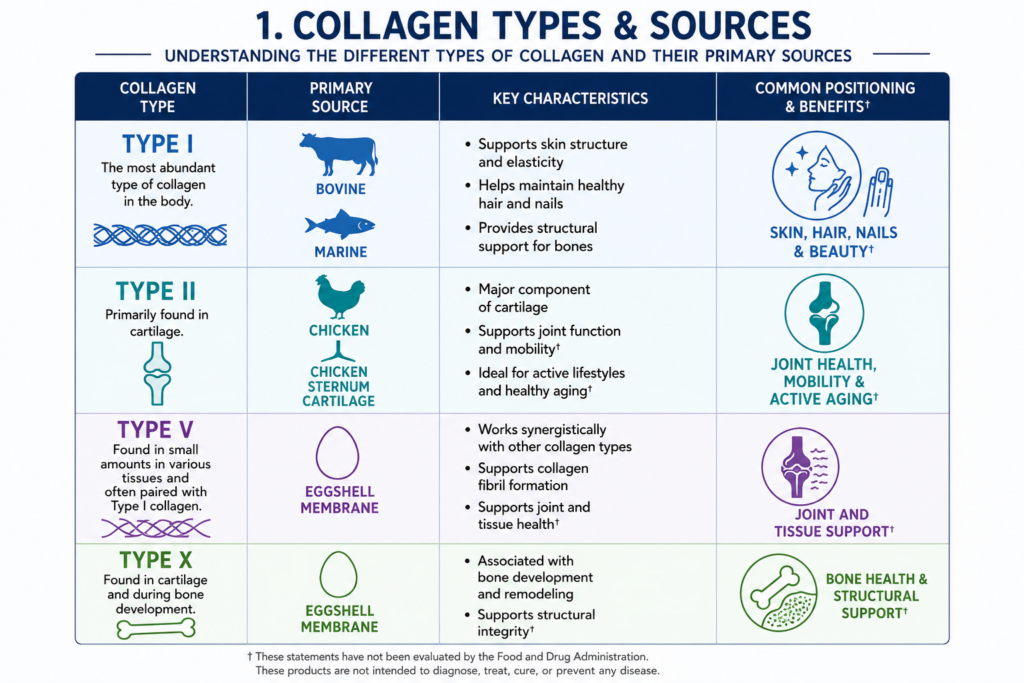
Not all collagen ingredients are the same. Different collagen types are associated with distinct structures and functions throughout the body, making source selection an important consideration during dietary supplement formulation and product development.
Type I Collagen
Type I collagen is the most abundant collagen found in the body and is commonly associated with skin structure, hair and nail support, and bone health. Because of these associations, it is frequently featured in beauty-focused formulations, healthy aging products, and premium wellness supplements.
Type I collagen is most commonly sourced from bovine collagen peptides and marine collagen peptides. While both sources are widely used, marine collagen has gained significant popularity in beauty-from-within products because of its smaller peptide size and strong consumer perception surrounding bioavailability and skin-focused benefits. †
For brands targeting beauty, wellness, and healthy aging consumers, Type I collagen often serves as the foundation of a collagen formulation strategy.
Type II Collagen
Type II collagen is primarily associated with cartilage and joint support, making it a key ingredient in mobility-focused formulations. It is commonly sourced from chicken collagen, chicken sternum cartilage, and specialized bone broth ingredients.
As active aging and mobility categories continue to expand, Type II collagen has become increasingly attractive for brands targeting consumers who want support for joint comfort, flexibility, recovery, and long-term movement. This positioning resonates with a wide range of consumers, from active adults and fitness enthusiasts to aging populations seeking proactive wellness solutions.
A notable ingredient in this category is KollaGen-IIxs™, a specialized Type II collagen ingredient that also provides hyaluronic acid for mobility-focused formulations. †
Why Brands Are Investing in Type II Collagen Ingredients
Type II collagen occupies a unique position within the collagen category because it aligns with one of today’s fastest-growing wellness priorities: mobility support.
Consumers are staying active longer and increasingly looking for solutions that help support movement, exercise recovery, flexibility, and everyday comfort. As a result, mobility-focused nutrition has become a major area of innovation across active nutrition, healthy aging, and sports nutrition categories.
For supplement brands, this creates opportunities to expand beyond traditional beauty collagen positioning and develop products that support structural wellness. Type II collagen also works well alongside complementary ingredients such as hyaluronic acid, MSM, glucosamine, chondroitin, boswellia, turmeric, and systemic enzymes. These ingredient combinations allow formulators to create more comprehensive mobility platforms that address multiple consumer needs within a single product.
The Growing Role of Marine Collagen and Alternative Sources
Consumer demand for sustainability, transparency, and ingredient differentiation continues to increase interest in alternative collagen sources.
Marine Collagen
Marine collagen has become one of the fastest-growing segments within the collagen category. Often positioned around beauty-from-within benefits, skin hydration, and premium wellness, marine collagen appeals to consumers seeking high-quality, specialized collagen products. †
Marine collagen is especially popular in flavored powders, drink mixes, ready-to-mix beverages, and stick pack formats because it aligns well with modern wellness routines and daily supplementation habits, the same delivery format innovation driving growth across the supplement category. As consumer interest in premium beauty and healthy aging products continues to grow, many collagen powder manufacturers have expanded their marine collagen offerings to meet demand.
Eggshell Membrane
Eggshell membrane ingredients offer another compelling opportunity for product differentiation. Naturally containing Type V and Type X collagen, eggshell membrane ingredients are frequently incorporated into joint support formulas, bone health products, and multi-collagen blends.
In addition to their unique collagen profile, eggshell membrane ingredients provide a strong sustainability story by utilizing materials that might otherwise become waste streams. This positioning can be particularly attractive to consumers who prioritize environmental responsibility alongside wellness benefits.
NEM® Eggshell Membrane is one example of an eggshell-derived ingredient that has gained recognition within the industry for its clinical research supporting healthy joint function and comfort.† Ingredients like these reflect the broader rise of branded ingredients reshaping how collagen products are positioned and differentiated.
Why Multi-Source Collagen Formulas Are Gaining Traction
Consumers increasingly view collagen as a whole-body wellness ingredient rather than a single-purpose beauty supplement. This shift has encouraged brands to develop formulations that address multiple consumer goals simultaneously.
By combining bovine, marine, chicken, and eggshell membrane ingredients, brands can create products positioned around beauty support, joint health, active aging, recovery, bone health, and overall wellness. This broader positioning often creates stronger merchandising opportunities because consumers may initially purchase a product for one benefit but continue using it because of additional perceived value.
For example, a consumer who begins using collagen for skin support may also appreciate benefits related to mobility or active lifestyle recovery. This expanded value proposition can help increase repeat purchases and improve long-term customer retention.
Formulation Considerations for Collagen Brands
When developing collagen supplements, brands should carefully evaluate several strategic formulation factors.
Source Selection
Different collagen sources can significantly influence taste, solubility, cost, label positioning, and consumer perception. Understanding how each source aligns with a brand’s target audience is an important first step in the formulation process. A custom supplement manufacturer with multi-source collagen experience can help narrow those trade-offs to the source combination that fits a brand’s cost target and flavor profile.
Delivery Format
Collagen continues to perform exceptionally well across powders, stick packs, capsules, gummies, and ready-to-mix beverage formats. Among these options, stick packs and flavored powders remain particularly attractive because they support convenience, portability, and daily usage habits.
Claims and Certifications
Retailer requirements and consumer expectations often influence certification strategies. Depending on the target market, brands may pursue certifications such as Non-GMO Project Verification, Gluten-Free Certification, Halal Certification, Kosher Certification, or marine sustainability claims to strengthen product positioning.
Flavor Optimization
Flavor remains one of the most important drivers of repeat purchases. High-dose collagen formulas, marine collagen systems, and mobility-focused ingredient blends often require sophisticated flavor masking and texture optimization strategies. Experienced formulation and sensory teams can play a critical role in creating products consumers enjoy using consistently.
What This Means for Dietary Supplement Brands
Capturing the multi-source collagen opportunity requires a set of formulation, positioning, and format decisions that single-source collagen never forced brands to make. Here are the most important considerations for your brand:
Formulation: Choosing which sources to combine, bovine, marine, chicken, and eggshell membrane, determines the collagen type profile, taste, solubility, and cost of your finished product. A multi-collagen blend behaves differently in mixing and flavor than a single bovine peptide, so source ratios and ingredient compatibility need to be solved early. Working with a dietary supplement contract manufacturer experienced in multi-source collagen formulation shortens that development cycle and protects sensory quality at scale.
Consumer Targeting: Collagen now serves two distinct buyers, the beauty-from-within consumer anchored in Type I, and the mobility and active-aging consumer drawn to Type II and branded joint ingredients. A multi-source formula lets one SKU speak to both, but the positioning, claims, and hero ingredients have to be chosen deliberately rather than assembled by default.
Format: Powders and stick packs continue to drive collagen’s daily-use growth, and each format carries its own flavor-masking and texture challenges, especially with marine collagen and high-dose mobility blends. Getting portioning, dissolvability, and taste right is what turns a trial purchase into a repeat one.
Source selection, dual-audience positioning, and format execution are interlocking decisions, and the brands that resolve them together rather than one at a time are the ones that bring differentiated collagen products to market first.
Frequently Asked Questions About Multi-Source Collagen
†These statements have not been evaluated by The Food and Drug Administration. This product is not intended to diagnose, treat, cure or prevent any disease.